
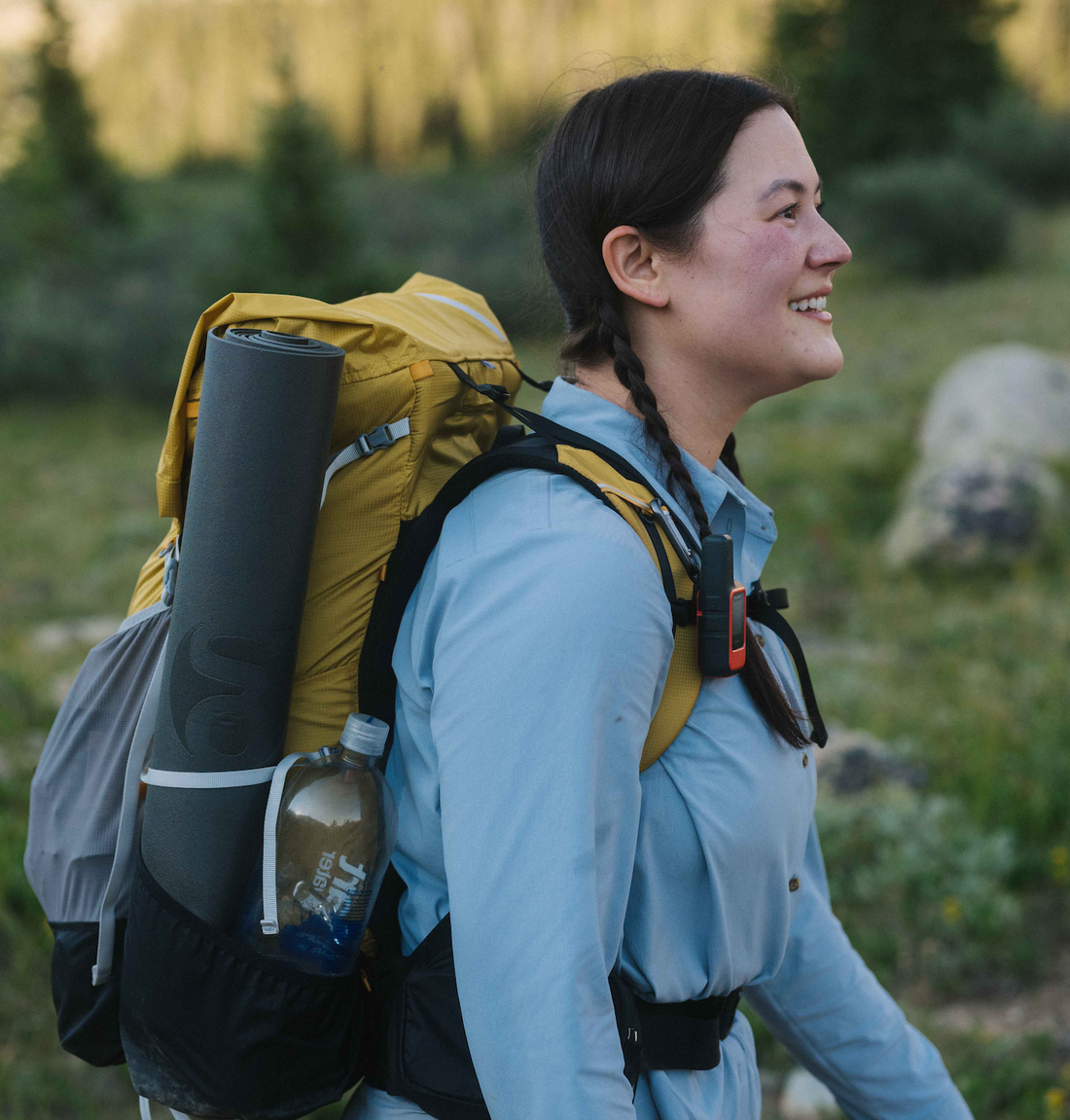
What Size Backpack Do I Need for Backpacking?
One of the most common questions hikers ask is what size backpack do I need for backpacking?
The answer depends on your trip length, gear setup, weather, and hiking style. Backpack size is measured in liters, and most ultralight backpacking packs range from 28 liters to 60 liters. The right size is less about bringing more and more about bringing what you actually need.
Below is a breakdown of common backpack sizes and how each Gossamer Gear pack fits into the picture.

Photo: Sean Greene
How Backpack Capacity Works
When you see a pack labeled 60L or 36L, that number represents the total storage volume including the main compartment and external pockets.
A larger pack can hold more food, layers, and bulkier gear. A smaller pack encourages a streamlined setup. The key is matching your gear volume to your objective.
If your gear is compact and intentional, you don’t need extra space. If you are carrying longer food hauls, cold weather insulation, or a bear canister, extra capacity matters.Chr
60 Liters: Long Distance and Extended Trips

Best for:
- Thru-hiking with the average kit
- 7+ day trips
- Winter conditions
- Bear canister requirements
- Long water carries
If you are heading out for a multi-week adventure or tackling your first thru-hike, 60 liters provides flexibility and margin.

Photo: Grace Mumm
The Mariposa 60 is built for long miles and heavier carries without feeling overbuilt. Large external pockets keep layers and wet gear accessible, and the supportive frame helps manage food-heavy sections. It is a go-to choice for hikers who want comfort and efficiency on extended trips.
50 Liters: The Versatile Sweet Spot

Best for:
- 3 to 7-day trips
- Shoulder season backpacking
- Moderate food carries
- Comfort focused hikers
For many backpackers, 50 liters is the ideal middle ground. It offers enough room for a bear can and extra layers while staying streamlined.

Photo: Sean Greene
The Gorilla 50 balances structure and weight. It carries comfortably when loaded and excels on weekend to week long trips. If you want room for essentials plus a few comfort items without overpacking, 50 liters is often the right size.
42 Liters: Streamlined Multi-Day Trips

Best for:
- Streamlined thru-hiking kits
- 2 to 5-day trips
- Experienced backpackers
- Summer conditions
- Low base weight setups
When your gear is dialed in, 40 to 42 liters is more than enough for multi-day adventures.

Photo: Jeff Podmayer
The G4-20 42L is a frameless, do-it-all pack designed for hikers who prioritize simplicity. Lightweight and cost-effective, it shines when your kit is compact and intentional. If your base weight is low, 42 liters gives you freedom without excess.
38 Liters: Lightweight with Intention

Best for:
- Overnights
- Short backpacking trips
- Minimal gear setups
- Fast and efficient missions

Photo: Sean Greene
The Skala 38 bridges the gap between traditional backpacking and minimalist travel. It is ideal for hikers who have trimmed down their gear but still want enough capacity for a few days outside. For summer overnights or efficient weekends, 38 liters often feels just right.
36 Liters: Ultralight and Fastpacking Ready

Best for:
- Fastpacking
- High mileage days
- 1 to 3-day trips
- Ultralight backpacking
At 36 liters, efficiency matters.

The Kumo 36 comes in both Superlight and Fastpack configurations. The Superlight version is built for classic ultralight backpacking with a simple, refined design. The Fastpack version features running vest-style straps and quick access storage for hikers who move quickly and cover big miles. If your goal is to take less and do more, 36 liters delivers.
28 Liters: Minimalist Overnights and Big Days

Best for:
- Ultralight overnights
- Summer trips with some insulation
- Extended day hikes
- Peak bagging
At 28 liters, every piece of gear must earn its place.

Photo: Sean Greene
The Grit 28 is built for intentional packing and movement. It works well for quick overnights, hut trips, and long day missions where you need layers, food, and safety gear without the bulk of a traditional backpacking pack.
How to Choose the Right Backpack Size
Start with your gear, not the pack. Lay everything out including shelter, sleep system, clothing, cook kit, food, and water.
Ask yourself:
- How many days of food will I carry at once?
- Do I need a bear canister?
- Am I hiking in summer or shoulder season?
- Is my base weight under 15 pounds or closer to 25?
- Do I prefer extra comfort items or a streamlined kit?
If you are new to backpacking and still refining your gear, a 50 to 60 liter pack like the Mariposa 60 or Gorilla 50 offers flexibility. As your kit becomes lighter and more compact, you may find that a G4-20 42L, Skala 38, or Kumo 36 fits your style better.

Photo: Sean Greene
Take Less. Do More.
The right backpack size is not about carrying as much as possible. It is about carrying exactly what you need for the experience you want.
Whether that means loading up a Mariposa 60 for a long trail, dialing in a Gorilla 50 for a week in the mountains, or moving fast with a Kumo 36 or Grit 28, the goal is the same. Efficient gear. Intentional packing. More time outside.